And I’m not thrilled with what it says about me
My partner and I were listening to a BBC interview with the author Joanne Harris about her new book, Broken Light.Harris explained that the 50-year-old protagonist, Bernie Moon, is going through menopause and feels invisible.
She’s given her life to other people — her husband, her son, her mother, and her friends (not that she has any of them left). At 16, she was full of promise and power. Now she’s a fading light.
“Do you think you’ll read it?” my partner asked.
“No,” I replied. I didn’t offer an explanation because Harris also wrote Chocolat, which was made into a successful film and I couldn’t remember whether my partner liked the film — if he did, I didn’t want to offend him by saying I didn’t and provoke a row. Relationships are difficult.
Living à deux often means avoiding landmines and walking on eggshells and I’m not very good at either — hence my less-than-stellar relationship history. While the solitary life may be occasionally lonely, at least you’re never wrong. Anyway, the reason I didn’t drool over Chocolat, despite liking chocolate and Juliette Binoche, is that I prefer gritty reality to magical realism — with the exception of Garcia Marquez and Allende.
But back to Bernie Moon and why I’m unlikely (never say never) to read Broken Light. While issues of menopause and invisibility don’t really interest me — I’m 78, so they’re ancient history — I absolutely cannot relate to the sort of self-sacrificing woman who after, “giving her life to other people, finally decides it’s time she thought of herself.”
No offense to the less selfish, it’s my problem. But from Ibsen’s Nora in A Doll House to Joan in the film The Wife(based on Meg Wolitzer’s 2003 novel of the same name ) to Cuban-Italian novelist Alba de Céspedes’ character, Valeria Cossati in The Forbidden Notebook — which I am currently reading — selflessness of this sort is such a frequent theme in books and films, I wonder if it’s the case in real life.
Really, do you know someone like Joan? She “. . .gave up a promising writing career in deference to her husband — her former literature professor and a distinguished author. Gracious and self-effacing, she spent 40 years devoting her intellect, charm and diplomacy to her husband before she finally starts to think about his betrayals.
Please. She waited 40 years? And he cheated too?
I don’t get it. These women spend the most vital, potentially productive years of their lives being good wives and mothers only to eventually realise they’ve never truly lived until, finally, something opens their eyes — the butterfly emerges from the domestic cocoon — and they’re selfish for the very first time.
I will never have that distinction. That’s a confession, not a boast.
When I look back on my life, I see very few examples of unselfish behaviour. I’m not proud of it, it’s just a fact — the gritty reality of my life. Who was I thinking of when I left my first husband shortly after he returned from Vietnam? Me. Ditto when my mother babysat my two children so that I could attend university and enjoy the things I’d missed out on by marrying at nineteen. Selfish? Hard to see it any other way.
Leaving my second husband, to move to a trailer in Washington, free from any responsibility except to write in peace, was not unselfish behaviour. Both marriages were already on shaky ground, the faults not entirely my own, but leaving decisively closed each chapter.
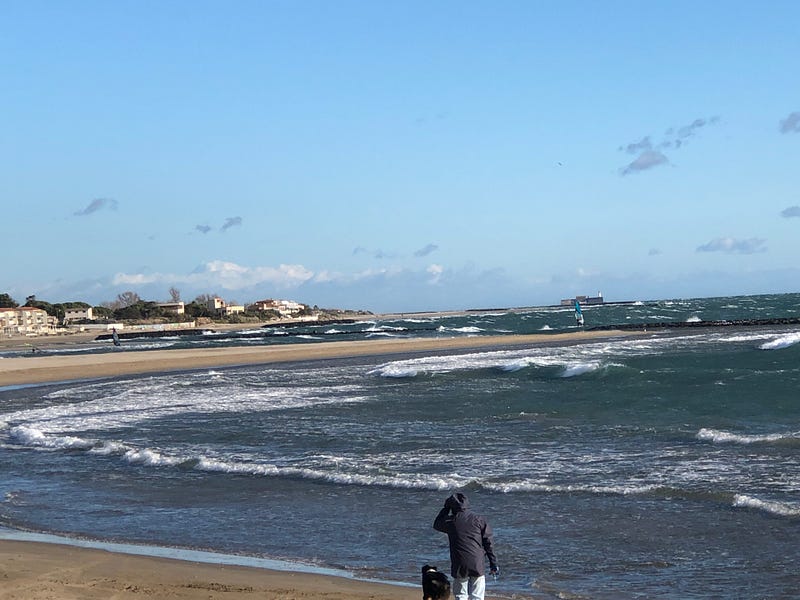
Since this is an essay, not a book, I’ll skip over several decades to my decision to move to France at 68. My grown children, a granddaughter and a great-granddaughter would all be impacted in different ways by my decision, but I did it anyway. Selfless Bernie Moon might have been justified in making such a move. Finally, she was doing something for herself. I was just doing something I’d always wanted to do —as usual, for myself.

Relationships are difficult. I know they require give and take, patience, tolerance, that sort of thing. A few of Bernie Moon’s self-sacrificing qualities would also help. I thought about that this weekend when my partner, an ardent booster of his home town football club, was watching an important game on TV. Recognising this, Bernie, or Valeria — probably Joan too, except her husband might have a loftier pastime if he wasn’t out cheating on her — would know exactly what was going on, they’d keep track of the scores, maybe even watch the game with their guys— after whipping up some delicious snacks.
By contrast, I took it all in very poor humour, mumbled darkly about horse and car races that he also likes to watch, sequestered myself in the bedroom and Googled sports widows. Then I was surly for the rest of the evening.
I really loathe this side of myself. I had a book I wanted to finish — “Forbidden Notebook,” except Valeria’s long-suffering endurance was beginning to irritate me, I wanted her to just walk out. Still, if I’d been alone, I would have been quite happy doing exactly what I was doing — other than Googling sports widows. Why couldn’t I find the generosity of spirit to let him enjoy the game?
Relationships are difficult. It takes time to develop good habits and a lifetime to break bad ones. But I’d like to think that even at 78, it’s not too late to give it a try.
Not taking my own needs quite so seriously would be a start — although I’m not trying for Bernie-style saintliness, I might as well say that right now. Tell me, would you really want to live with a saint? If so, I don’t want to know.
Stay tuned . . .more stories to come.
Join Medium with my referral link — Janice Macdonald
As a Medium member, a portion of your membership fee goes to writers you read, and you get full access to every story. janicemacdonald.medium.com
 OLD AGE IS A FOREIGN COUNTRY. SO IS FRANCE